Wired to Repeat: The Brain Science Behind Why Loop Games Are Impossible to Put Down
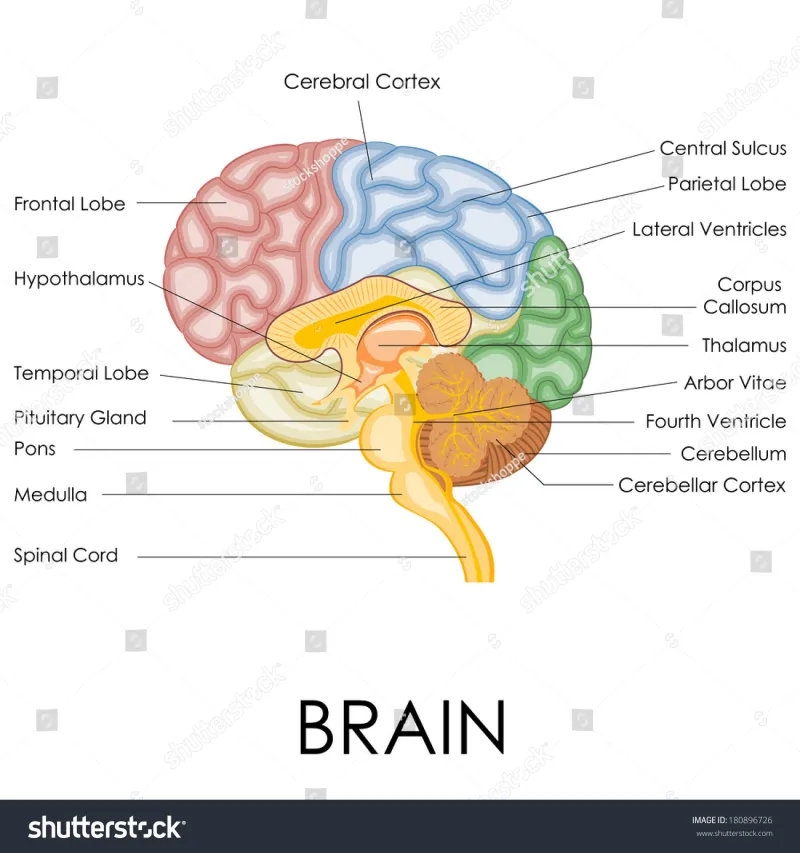
Photo: brain neurons glowing video game controller psychology, via image.shutterstock.com
You die. You restart. You do it all over again — and somehow, it feels good.
If you've ever lost three hours to Hades without noticing, or found yourself doing "just one more run" in a mobile puzzle game at midnight, you already know the pull. But what's actually happening inside your head when a loop-based game hooks you? Turns out, it's not a design trick. It's biology.
At LoopPlay, loops are kind of our whole thing. So we went deep — into the research, the game design theory, and a few expert perspectives — to figure out exactly why repetition in gaming doesn't just feel tolerable. For millions of players, it feels incredible.
The Dopamine Loop: Your Brain on Repetition
Let's start with the obvious suspect: dopamine. You've probably heard it called the "pleasure chemical," but that's not quite right. Neuroscientists increasingly describe dopamine as a anticipation chemical — it fires hardest not when you get a reward, but when you expect one.
Loop-based games exploit this beautifully. Every run, every puzzle reset, every new attempt comes loaded with possibility. Will this be the run where you unlock that new weapon? Will you finally beat your high score? Your brain doesn't know — and that uncertainty is the whole point. Psychologist B.F. Skinner's classic research on variable reward schedules showed that unpredictable rewards produce the most persistent behavior. Slot machines use the same principle. So does Hades.
"The genius of a well-designed loop is that failure doesn't feel like failure," says Dr. Lena Marsh, a cognitive behavioral researcher who studies engagement patterns in digital environments. "The player's brain reframes each attempt as progress toward an inevitable reward. You're not losing — you're loading."
That reframing is crucial. In Hades, dying sends you back to the House of Hades — but you keep your resources, unlock new dialogue, and inch closer to story revelations. The loop doesn't reset your progress. It is the progress.
Flow States and the Sweet Spot of Challenge
Beyond dopamine, the best loop games tap into something psychologist Mihaly Csikszentmihalyi called "flow" — that mental state where you're so absorbed in a task that time dissolves and self-consciousness disappears. Athletes call it being "in the zone." Gamers just call it Tuesday night at 2 a.m.
Flow happens when a task's difficulty perfectly matches your current skill level. Too easy, and you're bored. Too hard, and you're frustrated. The magic window in between? That's where loops live.
Games like Peglin — the charming roguelike that blends pachinko physics with deck-building — nail this balance by constantly recalibrating challenge. Each run gives you a different set of orbs and relics, which means your strategy shifts every time. You're never solving the exact same problem twice, but the core mechanics stay familiar enough that you never feel lost. Your skills grow; the game grows with them.
Mobile puzzle titles like Threes! or Monument Valley operate on a similar principle at a smaller scale. The loop is shorter, the stakes are lower, but the flow state is just as real. "Even a five-minute mobile session can produce measurable flow," notes game designer and researcher Chris Vogel, who has consulted on UX for several indie studios. "The loop doesn't have to be long. It has to be calibrated."
What Makes a Loop Feel Satisfying vs. Soul-Crushing
Not all loops are created equal — and every gamer has experienced the dark side of the mechanic. Think about a mobile game that resets your progress behind a paywall, or a roguelike where randomness feels punishing rather than exciting. That's a frustrating loop, and it produces anxiety instead of flow.
So what separates the good from the bad?
Meaningful variance. A satisfying loop changes in ways that feel significant. New enemies, new builds, new story beats. A frustrating loop changes arbitrarily — or worse, doesn't change at all.
Retained agency. Players need to feel like their decisions matter. If every run feels identical regardless of what you do, the loop collapses into monotony. Games like Dead Cells and Slay the Spire give players enough control that each run feels like their run.
Visible progression. Even when you fail, you should be able to point to something you learned or earned. Hades does this with permanent upgrades and relationship meters. Even losing feels like winning a little.
Appropriate session length. A loop that takes 45 minutes to complete creates a very different psychological experience than one that takes 8. Neither is inherently better — but mismatched expectations kill engagement fast. If you sit down for a quick session and find yourself trapped in a 90-minute commitment, resentment builds.
The Social Layer: Leaderboards and Shared Loops
Here's a dimension that doesn't get enough credit: community. Loops become exponentially more compelling when other people are running them alongside you.
Leaderboards transform a solo loop into a shared one. Suddenly your run isn't just about personal satisfaction — it's about how your result stacks up against thousands of other players doing the exact same thing. That social comparison activates entirely different neural pathways, layering competitive motivation on top of the existing reward structures.
At LoopPlay, we see this every day. Players return to games not just because they want to improve their own score, but because they want to beat someone else's. Community challenges, weekly rotation modes, and shared high-score boards extend the shelf life of any loop-based game dramatically.
Speedrunning communities take this to its logical extreme. Runners don't just play the loop — they dissect it, optimize it, and perform it for audiences. The loop becomes a stage.
Why This Matters for How You Play
Understanding the psychology behind loop games isn't just interesting — it's useful. When you know that dopamine fires hardest on anticipation, you can recognize when a game is engineering that feeling artificially versus earning it through genuine design. When you understand flow states, you can choose games that match your current headspace rather than fighting against it.
And when you know what a satisfying loop looks like, you'll stop settling for frustrating ones.
The best loop-based games respect your time, reward your attention, and leave you feeling like you've genuinely grown — even if you're right back at the starting screen. That's not manipulation. That's craft.
Spin up, play on. Your brain was built for this.